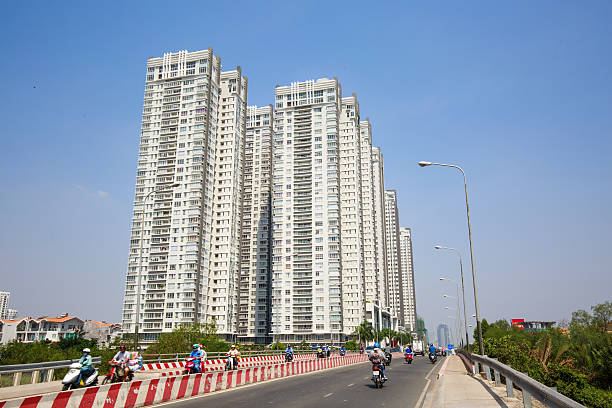
Finding an apartment in Vietnam can feel exciting at first. There are many options, from serviced apartments to local condos, private houses, and expat-friendly buildings in Ho Chi Minh City, Hanoi, Da Nang, and other major cities.
But for foreigners, renting is not only about price and location. You also need to check the lease contract, deposit conditions, management fees, utility bills, temporary residence registration, and move-out rules.
Can Foreigners Rent Apartments in Vietnam?
Yes. Foreigners can rent apartments, serviced residences, villas, and houses in Vietnam. In practice, most foreign residents rent through real estate agents, building management offices, serviced apartment operators, or direct landlords.
However, the important point is not simply whether you can rent. The real issue is whether the apartment is properly managed, whether the lease terms are clear, and whether your temporary residence is declared after move-in.
A good apartment is not only “nice and cheap.” It should also have clear ownership, transparent fees, a proper lease contract, and residence registration support.
Recent Legal and News Context
Vietnam’s housing framework is mainly governed by the Housing Law and related civil and residence regulations. The 2023 Housing Law covers housing ownership, management, use, and housing transactions in Vietnam.
Vietnam News has also explained that foreign visitors and residents must have their temporary stay registered with local authorities, while accommodation providers are generally responsible for carrying this out. For long-term foreign tenants, this means the landlord or building operator should support the residence declaration process.
✔ Vietnam’s housing rules cover ownership, management, use, and housing transactions
✔ Foreign stays must be declared to local authorities
✔ Accommodation providers usually handle the temporary residence declaration
✔ Tenants should still confirm that the declaration was actually completed
Apartment Rental Flow in Vietnam
Choose area
and budget
Visit and check
the unit
Review lease
and fees
Move in and
register stay
Common Apartment Types
Lease Contract Checklist
Before paying a deposit, ask for the lease draft and review it carefully. If the contract is only in Vietnamese, ask for an English explanation or bilingual version. For important contracts, consider having a trusted Vietnamese speaker or advisor review it.
1. Landlord information
Check the owner’s name, ID information, phone number, and whether the person signing has the right to lease the apartment.
2. Deposit and refund terms
Clarify how much deposit is required, when it will be refunded, and what deductions are allowed.
3. Monthly rent and payment date
Confirm whether rent is paid monthly, quarterly, or in another schedule.
4. Utilities and management fees
Check electricity, water, internet, parking, cleaning, and building management fees.
5. Furniture and handover list
Take photos and make a written list of furniture, appliances, keys, access cards, and existing damage.
6. Early termination clause
Make sure you understand what happens if you need to move out early.
Typical Costs to Prepare
Temporary Residence Registration After Move-In
After moving into an apartment, your stay should be declared to the local authority. In many cases, the landlord, serviced apartment, hotel, or building operator handles this process.
Still, foreign residents should not ignore it. If you later apply for a TRC, work permit-related procedure, bank update, or police record, address consistency may become important.
✔ Has my temporary residence been declared?
✔ Do you need my passport and visa/TRC copy?
✔ Can I get confirmation if my company or bank asks?
✔ Who should I contact if I move out?
Move-In Inspection Checklist
✔ Test air conditioners, refrigerator, washing machine, and water heater
✔ Check water pressure and drainage
✔ Confirm number of keys, access cards, and parking cards
✔ Record existing scratches, stains, or broken items
✔ Save chat messages and payment receipts
Common Mistakes Foreign Tenants Make
1. Paying a deposit before checking the owner
Always make sure the person receiving money is the correct landlord or authorised representative.
2. Not confirming what is included in rent
A cheap rent may become expensive if management fee, parking, internet, and utilities are all separate.
3. Not documenting the apartment condition
Without photos, deposit disputes can become difficult at move-out.
4. Ignoring temporary residence registration
This may create administrative inconvenience later, especially for long-term residents.
5. Signing without an early termination clause
If your job changes or your visa plan changes, an unclear termination clause can become costly.
Official and Practical References
· Vietnam News on foreign temporary residence declaration: Vietnam News Expat Corner
· Vietnam Housing Law overview: Vietnam Law Magazine
· Vietnam Immigration Department: Vietnam Immigration Portal
✔ Vietnam’s Housing Law covers housing management, use, and transactions
✔ Foreign stays must be registered with local authorities
✔ Accommodation providers normally handle residence declaration
✔ Lease contracts should clearly state rent, deposit, payment schedule, and maintenance responsibility
Final Note
Renting an apartment in Vietnam is usually straightforward, but small details matter. A clear lease, documented handover, transparent fees, and proper residence registration can prevent many problems later.
Before signing, take one extra hour to check the contract, fees, and move-in condition. It can save you a lot of stress when you move out.
• Vietnam News – New Temporary Residence Declaration Rules for Foreign Residents in Vietnam
• Vietnam Law Magazine – Overview of Vietnam’s 2023 Housing Law and Residential Registration Updates
• Vietnam Immigration Department – Temporary Residence Registration Procedures for Foreign Nationals