As AI data centers expand rapidly, electricity demand is becoming one of the biggest bottlenecks in the AI industry.
The International Energy Agency has warned that global data center electricity demand could rise sharply by 2030, driven by AI servers, cloud infrastructure, and cooling systems.
This is why nuclear power, SMRs, power grids, transformers, ESS, and cooling infrastructure are back in focus as core AI infrastructure themes.
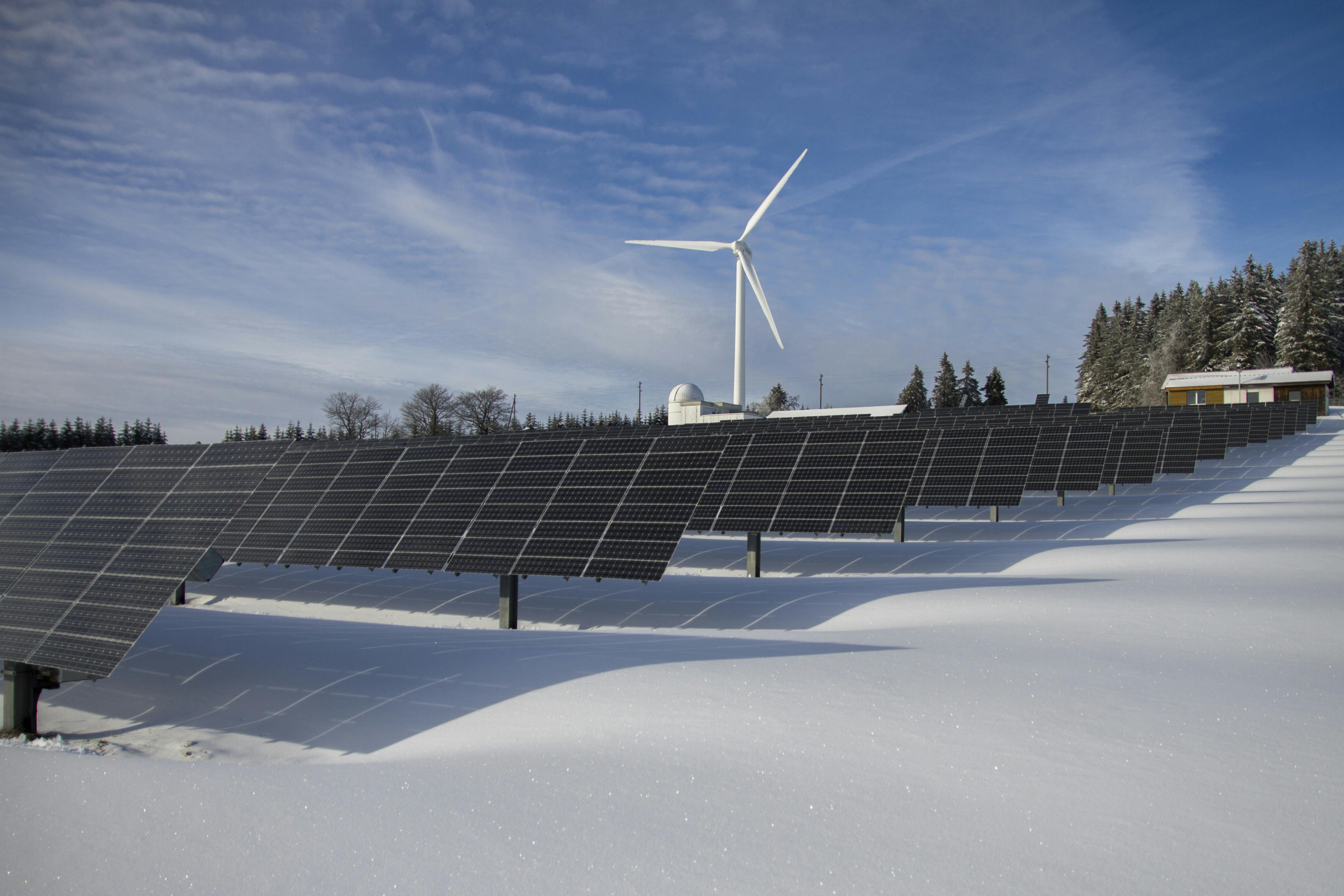
AI data centers require massive and stable electricity supply, bringing nuclear power and grid infrastructure back into focus.
1. Why Power Is Becoming Critical in the AI Era
The AI race started with semiconductors, but it is now expanding into energy infrastructure. Even the most advanced GPUs and servers cannot operate without stable electricity.
Generative AI training and inference require large-scale, continuous power supply. Electricity has become one of the most important foundations of AI competitiveness.
| Category | What AI Requires | Investment Focus |
|---|---|---|
| Semiconductors | GPUs, HBM, server memory | AI chips and memory |
| Data Centers | Server space and cooling systems | IDC and cloud infrastructure |
| Power | Stable 24/7 electricity supply | Nuclear power and grids |
| Cooling | Heat management and efficiency | Liquid cooling and HVAC |
2. How Fast Is Data Center Power Demand Growing?
According to the IEA, global data center electricity demand could rise from around 460 TWh in 2024 to more than 1,000 TWh by 2030.
AI-focused data centers are growing even faster, as high-performance GPUs, HBM memory, storage devices, and cooling systems all consume significant energy.
AI data centers are not ordinary internet server rooms. They operate massive GPU clusters, high-bandwidth memory, storage devices, and cooling systems at the same time.
| Indicator | Trend or Forecast | Meaning |
|---|---|---|
| 2024 | Data center electricity demand around 460 TWh | Baseline level |
| 2030 | Could exceed 1,000 TWh | More than double |
| AI Data Centers | Rapid electricity use growth | AI is the main demand driver |
| United States | Data centers may take a larger power share | Grid pressure increases |
3. Why Nuclear Power Is Back in Focus
Solar and wind power are expanding quickly, but their output depends on weather and time of day. AI data centers, however, need continuous electricity around the clock.
Nuclear power can provide large-scale and stable electricity with relatively low carbon emissions. This makes it increasingly relevant as a base-load power source for AI infrastructure.
| Power Source | Strength | Limitation |
|---|---|---|
| Nuclear | Stable large-scale 24/7 power | Long construction and regulation |
| SMR | Smaller and potentially flexible deployment | Commercialization still needed |
| Solar | Fast installation | No generation at night |
| Wind | Low-carbon power | Weather-dependent |
| ESS | Supports power storage | Large-scale long-duration limits |
4. Why SMRs Are Mentioned Alongside AI
SMR stands for small modular reactor. Compared with traditional large nuclear reactors, SMRs are designed to be smaller and potentially easier to deploy near industrial zones or major power demand centers.
Commercial deployment will still take time, but SMRs are increasingly discussed as a long-term solution for AI data centers and industrial power demand.
SMRs will not solve data center power shortages immediately. However, for the post-2030 AI infrastructure cycle, they may remain a major policy and investment theme.
| Category | Why SMRs Matter | Risk to Check |
|---|---|---|
| Location | Potential deployment near demand centers | Permits and local acceptance |
| Power | Stable base-load role | Commercial timeline |
| Carbon | Low-carbon power source | Waste and safety debate |
| Industry | Parts, construction, operation ecosystem | Profitability proof |
5. How Nuclear Energy Stocks Move
When AI power shortage becomes a major market theme, nuclear-related stocks are no longer viewed only as energy names. They are increasingly interpreted as AI infrastructure beneficiaries.
Investors often look beyond nuclear plant builders and include nuclear components, power grids, transformers, cables, ESS, and cooling systems in the same value chain.
| Sector | Related Industry | Why It Matters |
|---|---|---|
| Nuclear Construction | Plant engineering and construction | Large project expectations |
| Components | Valves, pumps, control systems | Core nuclear supply chain |
| Power Grid | Transmission and distribution equipment | Essential for data center connection |
| Transformers | High-voltage transformers | Power infrastructure bottleneck |
| Cooling | HVAC and liquid cooling | AI server heat management |
6. Why Korean Companies May Benefit
Korea has strong capabilities in nuclear design, construction, components, and power equipment. As AI data center power demand grows, Korean nuclear and grid infrastructure companies may attract more attention.
However, nuclear-related stocks are highly sensitive to policy, orders, permits, and overseas project news. Investors should check actual order backlog and earnings visibility, not just the theme.
| Area to Check | What to Review | Investment View |
|---|---|---|
| Orders | Domestic and overseas nuclear projects | Actual revenue conversion |
| Components | Nuclear equipment supply contracts | Margins and delivery schedule |
| Power Equipment | Transformers and cables | Data center expansion beneficiary |
| Policy | Government nuclear and SMR plans | Regulatory direction matters |
| Earnings | Revenue and operating profit | Separate theme from fundamentals |
7. Key Risks for Investors
AI power shortage is a powerful long-term theme, but not every nuclear-related stock will benefit equally.
Some stocks may move mainly on expectations, even when actual nuclear revenue exposure is limited. Investors should confirm real business exposure to nuclear power, grids, data centers, or power equipment.
The AI power shortage theme may remain valid for years, but short-term stock prices can move sharply on headlines. Order backlog, revenue exposure, and earnings improvement must be checked.
| Risk | Details | Response |
|---|---|---|
| Theme Overheating | Expectations may run ahead of earnings | Check valuation and orders |
| Permits | Nuclear and SMR approval risks | Track policy schedule |
| Construction Time | Nuclear projects take years | Use long-term perspective |
| Grid Bottleneck | Transmission may be the real constraint | Check grid equipment names |
| Interest Rates | Infrastructure projects require heavy capital | Monitor rate cycle |
This article is based on International Energy Agency reports on energy and AI, global reporting on AI data center electricity demand, and industry forecasts on power grid pressure from data center expansion.
Key reference: The IEA has projected that global data center electricity demand could rise from around 460 TWh in 2024 to more than 1,000 TWh by 2030. AI data centers, grid expansion, nuclear power, SMRs, transformers, ESS, and cooling infrastructure are increasingly viewed as connected investment themes.
Final Thoughts
The biggest bottleneck in the AI era is no longer only semiconductors. Power, grids, cooling, and data center infrastructure are becoming part of the AI competition.
In this environment, nuclear power and SMRs are being re-evaluated as stable low-carbon power sources. AI data centers require 24/7 electricity, making base-load power increasingly important.
However, nuclear-related investments require careful review of policy, orders, earnings, and actual business exposure. The theme is strong, but identifying the real beneficiaries is the key.
VN BizLab Insight
This article is based on international energy reports, public industry forecasts, and major economic reporting. It is not a recommendation to buy or sell any specific stock. Investors should always check company filings and earnings before making investment decisions.