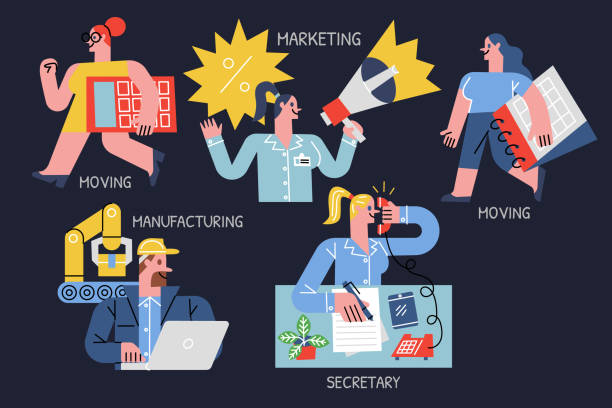
The future workplace will reward people who can combine technology, judgment, communication, and adaptability.
The workplace is changing faster than many organizations expected. Artificial intelligence, automation, hybrid work, digital platforms, and global competition are reshaping what companies need from employees and leaders.
By 2030, technical skills will still matter. But the most valuable professionals will not be those who simply know how to use tools. They will be those who can think clearly, adapt quickly, communicate effectively, and work with both humans and intelligent systems.
The future of work will not be defined by AI alone. It will be defined by how well people combine AI literacy, human judgment, leadership, creativity, data thinking, and continuous learning.
Why Future Skills Are Changing
For decades, career development focused heavily on specialization. Employees built expertise in a specific function, system, or industry. That expertise still matters, but it is no longer enough.
AI and automation are taking over routine analysis, repetitive documentation, basic reporting, scheduling, customer support, and standard administrative tasks. As this happens, the value of human work shifts toward judgment, interpretation, creativity, trust, and execution.
| Old Career Advantage | Future Career Advantage |
|---|---|
| Knowing one system well | Learning new systems quickly. |
| Performing routine tasks | Solving complex problems. |
| Following fixed processes | Improving and redesigning processes. |
| Reporting information | Interpreting information for decisions. |
AI Literacy Will Become a Basic Business Skill
AI literacy does not mean every employee must become a machine learning engineer. It means employees must understand how AI tools work, where they are useful, where they are risky, and how to use them responsibly.
By 2030, AI literacy may become as basic as spreadsheet literacy was in the previous generation of office work.
The most valuable employees will not be replaced by AI. They will know how to use AI to produce better decisions, faster analysis, and higher-quality work.
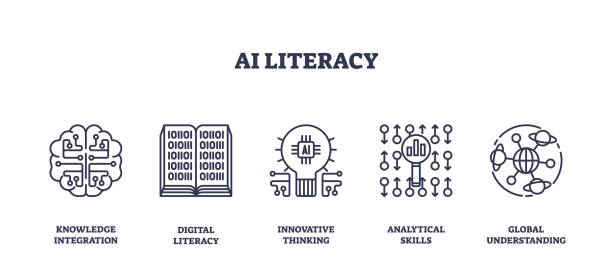
AI literacy will become a foundation for productivity, decision-making, and career growth.
Critical Thinking Will Matter More Than Ever
AI can generate answers quickly, but speed does not guarantee accuracy. Employees must be able to evaluate whether AI-generated information is logical, complete, relevant, and reliable.
This makes critical thinking one of the most important future workplace skills. Professionals must ask better questions, identify weak assumptions, compare evidence, and understand the business context behind every recommendation.
| AI Output | Human Skill Needed |
|---|---|
| Fast summary | Check accuracy and missing context. |
| Forecast or prediction | Question assumptions and data quality. |
| Business recommendation | Evaluate risk, feasibility, and consequences. |
| Automated report | Interpret what it means for decision-making. |
Data Thinking Will Separate Strong Professionals
As companies become more data-driven, employees need to understand how data is created, cleaned, interpreted, and used. This does not mean everyone must become a data scientist.
It means professionals should know how to read dashboards, question data quality, understand basic metrics, and connect numbers to business outcomes.
Data thinking is not only a technical skill. It is a management skill because poor data often leads to poor decisions.

Data thinking helps employees connect information, decisions, and business outcomes.
Communication Will Become a Strategic Advantage
As work becomes more digital and distributed, communication becomes more important. Employees must explain complex ideas clearly, write well, manage virtual collaboration, and translate technical information into business language.
This is especially important in AI-enabled organizations. If employees cannot explain what an AI recommendation means, why it matters, or what action should follow, the value of the technology is limited.
- Writing clear business messages.
- Explaining data and AI outputs.
- Aligning teams across locations.
- Managing difficult conversations.
- Presenting recommendations to decision-makers.
Adaptability Will Be Essential
By 2030, many roles will change faster than job descriptions can be updated. Employees will need to learn new tools, adjust to new workflows, and work with changing business models.
Adaptability does not mean accepting every change blindly. It means being able to learn, adjust, experiment, and remain effective when conditions change.
Adaptability will become one of the strongest career advantages in a fast-changing workplace.
The future will reward people who can keep learning while continuing to deliver results.
Leadership Will Not Be Limited to Managers
In the workplace of 2030, leadership will not belong only to people with formal management titles. Employees at every level will need to lead projects, influence others, manage change, and take ownership of outcomes.
This is especially true in flatter, hybrid, AI-enabled organizations where decision-making may happen across teams rather than through traditional hierarchy.
| Leadership Skill | Why It Matters |
|---|---|
| Ownership | Drives accountability without constant supervision. |
| Influence | Helps align cross-functional teams. |
| Coaching | Supports team learning and capability building. |
| Change management | Helps teams adapt to new tools and processes. |
Creativity Will Become More Practical
Creativity is often misunderstood as an artistic skill. In business, creativity means finding better ways to solve problems, improve processes, serve customers, design products, and respond to change.
AI can generate ideas, but humans still need to decide which ideas are useful, realistic, ethical, and commercially valuable.
In the AI era, creativity becomes more valuable when it is combined with judgment, business context, and execution discipline.
Cybersecurity Awareness Will Be a Basic Workplace Skill
As more business activity moves through digital systems, cybersecurity awareness becomes essential for all employees, not only IT teams.
Employees must understand phishing risks, password security, data privacy, access controls, and responsible use of AI tools. A single careless action can create business-wide exposure.

Cybersecurity awareness is becoming part of everyday business responsibility.
The Most Important Skills by 2030
| Skill | Why It Will Matter |
|---|---|
| AI literacy | Using AI responsibly and effectively. |
| Critical thinking | Evaluating outputs, assumptions, and decisions. |
| Data thinking | Connecting information to business outcomes. |
| Communication | Explaining complex ideas clearly. |
| Adaptability | Remaining effective as work changes. |
| Leadership | Guiding teams through uncertainty. |
| Creativity | Solving problems in new and practical ways. |
| Cybersecurity awareness | Reducing digital business risk. |
How Companies Should Prepare Their Workforce
Companies should not wait until 2030 to develop these capabilities. Workforce transformation requires long-term planning, training, coaching, and new performance expectations.
- Build AI literacy programs for all employees.
- Train managers to lead hybrid and AI-enabled teams.
- Strengthen data quality and data interpretation skills.
- Encourage continuous learning and internal mobility.
- Measure outcomes, not only activity.
- Invest in communication and leadership development.
- Include cybersecurity awareness in regular training.
Future skills should not be treated as optional training. They are becoming part of business resilience.
Executive Checklist for 2030 Readiness
| Area | Recommended Action |
|---|---|
| AI | Make AI literacy a baseline workforce skill. |
| Data | Improve data interpretation and decision-making capability. |
| Leadership | Develop managers and project leaders at multiple levels. |
| Learning | Create continuous upskilling pathways. |
| Security | Train every employee on cybersecurity awareness. |
| Culture | Reward adaptability, ownership, and collaboration. |
Final Thoughts
The workplace of 2030 will not reward people simply for knowing one tool, one system, or one process. It will reward people who can keep learning, think clearly, communicate well, use AI responsibly, and make sound decisions under uncertainty.
Technology will continue to change. The most valuable professionals will be those who can change with it while preserving the human judgment, trust, and creativity that organizations still need.
The future of work is not only about new technology. It is about stronger human capability.
VN BizLab EN