AI agents are moving beyond simple chatbots and becoming autonomous systems that can support real business operations.
Artificial intelligence is entering a new stage. For several years, companies focused mainly on generative AI tools that could write, summarize, translate, search, and create content. In 2026, the conversation is shifting toward AI agents.
AI agents are different from traditional software tools. They can understand goals, break tasks into steps, interact with systems, monitor progress, and support decision-making with limited human input.
AI agents are becoming a new layer of digital labor. They are not just answering questions. They are beginning to execute workflows, support operations, and reshape how companies manage productivity.
What Are AI Agents?
An AI agent is an artificial intelligence system designed to take action toward a defined goal. Unlike a basic chatbot that responds to a single prompt, an AI agent can complete multi-step tasks.
For example, a simple chatbot may answer a customer question. An AI agent may check the customer account, review previous orders, generate a response, update a ticket, notify a sales team, and recommend the next action.
| Traditional AI Tool | AI Agent |
|---|---|
| Responds to prompts | Works toward a goal |
| Handles one task at a time | Completes multi-step workflows |
| Requires frequent human input | Can operate with partial autonomy |
| Supports productivity | Supports business execution |
Why AI Agents Are Becoming Important in 2026
The rise of AI agents reflects a broader business problem. Companies are under pressure to improve productivity, reduce repetitive work, improve customer service, and make faster decisions.
At the same time, many organizations are discovering that simply giving employees access to AI chat tools is not enough. Real productivity gains require AI to be connected to workflows, data, systems, and clear business outcomes.
The value of AI agents comes from workflow integration. They become powerful when they connect with business systems, not when they remain isolated tools.
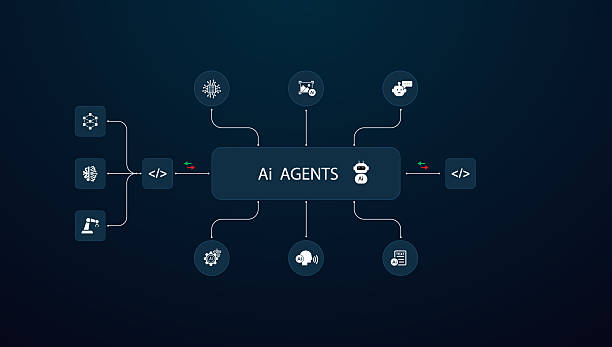
AI agents depend on data, business rules, and workflow integration to create measurable value.
How Businesses Are Using AI Agents
AI agents are being tested across many business functions. Some use cases are still experimental, while others are already becoming practical in customer support, sales, IT, cybersecurity, finance, HR, and operations.
| Business Function | AI Agent Use Case |
|---|---|
| Customer Service | Resolve tickets, answer questions, update records. |
| Sales | Qualify leads, draft follow-ups, summarize client history. |
| Finance | Analyze reports, detect anomalies, support forecasting. |
| Human Resources | Support onboarding, answer policy questions, organize training. |
| IT and Security | Monitor alerts, classify risks, assist incident response. |
| Operations | Track workflows, flag bottlenecks, recommend actions. |
The strongest applications usually involve repetitive but information-heavy work. These are areas where employees spend significant time collecting data, checking systems, writing updates, and coordinating follow-up actions.
From Chatbots to Digital Workers
The most important change is conceptual. Companies are beginning to think of AI agents as digital workers rather than simple software features.
This does not mean AI agents are employees in a legal or human sense. It means they are starting to perform work-like activities inside the organization.
The shift from chatbot to AI agent is the shift from information response to task execution.
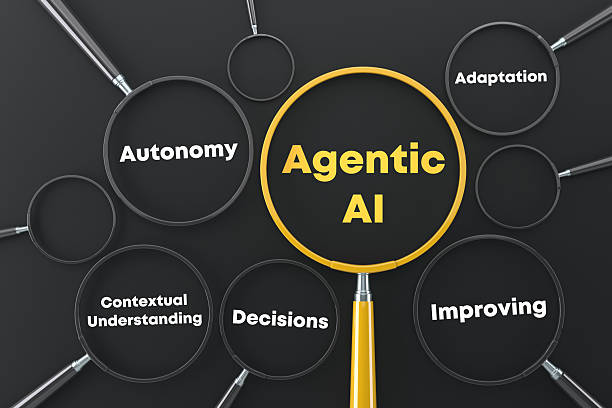
AI agent adoption requires leadership alignment, governance, and process redesign.
Why AI Agents Require Workflow Redesign
Many companies make the mistake of adding AI agents on top of old processes. This often creates confusion rather than productivity.
To create value, companies must redesign workflows around what humans do best and what AI agents can support efficiently.
| Old Workflow | AI Agent Workflow |
|---|---|
| Employee manually collects information | Agent gathers and summarizes data. |
| Manager reviews every routine request | Agent handles standard cases and escalates exceptions. |
| Teams wait for status updates | Agent monitors progress and flags delays. |
| Reports are created manually | Agent drafts reports for human review. |
This redesign is where real productivity gains begin. The goal is not to replace every human task. The goal is to remove low-value friction from daily work.
The Role of Human Oversight
AI agents can operate with increasing autonomy, but they still require human oversight. Businesses must decide which tasks agents can perform independently and which actions require approval.
This is especially important in finance, legal, security, healthcare, compliance, and customer-facing decisions.
Autonomy should increase only when trust, accuracy, controls, and accountability are clearly established.
| Agent Autonomy Level | Typical Control |
|---|---|
| Assist | Agent recommends; human decides. |
| Execute low-risk tasks | Agent acts within predefined rules. |
| Escalate exceptions | Agent handles routine work and escalates unusual cases. |
| Operate autonomously | Agent acts with monitoring and audit trails. |
AI Agents and Cybersecurity
Cybersecurity is one of the clearest areas where AI agents are becoming important. Security teams face massive volumes of alerts, logs, suspicious activity, and incident reports.
AI agents can help classify alerts, identify patterns, prioritize risks, and support faster response. However, the same technology can also be used by attackers to automate phishing, scan vulnerabilities, and scale attacks.

Cybersecurity shows both the opportunity and risk of autonomous AI systems.
This creates a new operating environment where companies must use AI to defend against AI-enabled threats.
The Productivity Promise and the ROI Challenge
AI agents promise higher productivity, but value is not automatic. Companies must measure whether agents reduce cycle time, improve quality, lower cost, increase customer satisfaction, or reduce risk.
The wrong metric is simply the number of agents deployed. The right metric is business impact.
| Weak Metric | Better Metric |
|---|---|
| Number of AI agents | Process time saved. |
| Number of users | Adoption quality and outcome improvement. |
| Prompt volume | Revenue, cost, risk, or service impact. |
| Tool usage | Workflow performance improvement. |
AI agents should be evaluated like business process investments, not like experimental software features.
Risks Businesses Must Manage
AI agents introduce new risks because they can take action, not just generate information. This makes governance, access control, auditability, and human oversight essential.
- Incorrect actions based on inaccurate data.
- Unauthorized access to sensitive systems.
- Poorly defined escalation rules.
- Lack of accountability when decisions go wrong.
- Overreliance on automation.
- Security exposure through connected systems.
- Customer trust issues if AI actions are unclear.
These risks do not mean companies should avoid AI agents. They mean companies should deploy them with clear controls.

AI agents will require stronger governance as they become more connected to business systems.
How Executives Should Start
The best approach is to begin with narrow, measurable use cases. Companies should avoid trying to automate everything at once.
Good starting points include repetitive workflows, high-volume support requests, internal reporting, IT ticket triage, sales follow-up, document review, and workflow monitoring.
| Starting Principle | Recommended Action |
|---|---|
| Start narrow | Choose one workflow with measurable pain points. |
| Define controls | Set approval, escalation, and access rules. |
| Measure outcomes | Track time, cost, quality, and risk impact. |
| Train employees | Teach teams how to supervise and collaborate with agents. |
| Scale carefully | Expand only after proving value and stability. |
Executive Checklist for 2026
| Area | Key Question |
|---|---|
| Strategy | Which workflows are best suited for AI agents? |
| Data | Is the underlying data accurate and accessible? |
| Governance | Who is accountable for agent actions? |
| Security | What systems can agents access? |
| People | Are employees trained to supervise AI agents? |
| ROI | What business outcome will prove value? |
Final Thoughts
AI agents represent a major shift in enterprise technology. They move artificial intelligence from passive assistance toward active participation in business workflows.
The companies that succeed will not be those that deploy the most agents. They will be those that redesign work carefully, establish strong governance, train employees, and measure business value clearly.
The rise of AI agents is not simply a technology trend. It is a management trend, a workforce trend, and an operating model trend.
VN BizLab EN