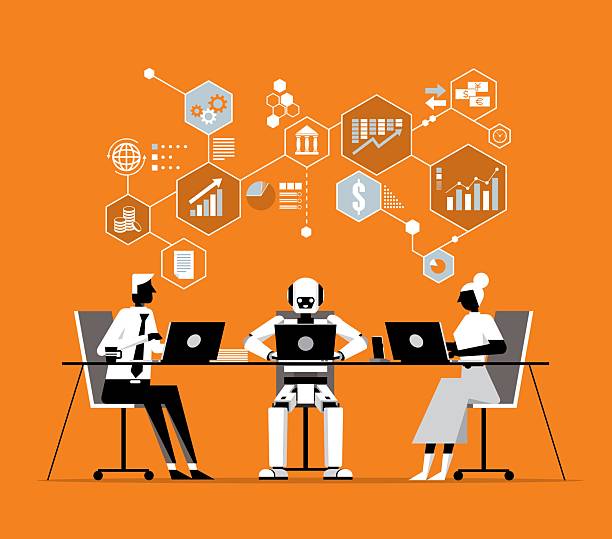
Middle managers are becoming the bridge between AI technology, executive strategy, and employee performance.
For years, business experts predicted that artificial intelligence would eliminate layers of management. If AI could automate reporting, analyze performance, and coordinate workflows, many assumed middle managers would eventually become unnecessary.
Yet the reality emerging in 2026 is more complicated. AI is changing management, but it is not eliminating the need for managers. In many companies, it is making strong middle management more important.
AI can automate tasks, generate reports, and support decisions. But it cannot fully replace the human role of aligning strategy, managing people, resolving conflicts, building trust, and guiding teams through change.
Why Everyone Thought Managers Would Disappear
The prediction seemed logical. Traditional management structures often included layers of reporting, approvals, status updates, and administrative coordination.
If AI systems can generate reports, monitor performance, summarize meetings, coordinate workflows, and provide recommendations, it seems reasonable to ask whether companies still need as many managers.
| Traditional Management Task | AI Capability |
|---|---|
| Performance reporting | Automated dashboards and summaries. |
| Status updates | AI-generated progress tracking. |
| Workflow coordination | AI agents and task automation. |
| Basic decision support | AI recommendations and analysis. |
On paper, this suggests fewer managers. In practice, however, AI does not remove management complexity. It often moves management complexity to a different level.
What Actually Happened
Companies quickly discovered that AI adoption creates new questions: Who owns the workflow? Who verifies AI output? Who explains new tools to employees? Who decides when AI can act independently and when a human must approve?
These questions cannot be answered by software alone. They require judgment, communication, trust, and accountability.
AI does not remove the need for management. It changes the kind of management that creates value.
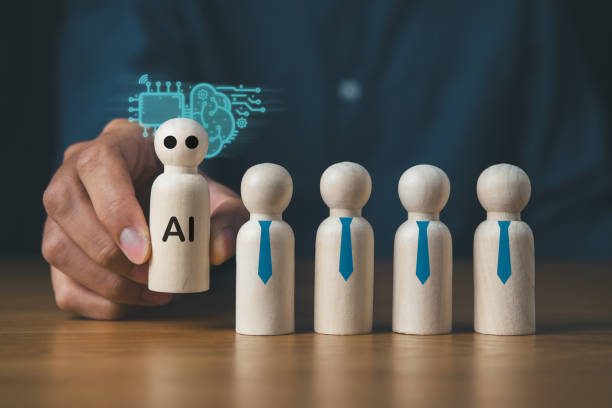
Successful AI adoption depends as much on people management as technology implementation.
What Microsoft’s Work Trend Index Suggests
Microsoft’s Work Trend Index has become one of the most widely cited references on AI and the future of work. Its 2025 report introduced the idea of the “Frontier Firm,” an organization built around human-AI collaboration, active use of agents, and a belief that agents are key to realizing return on investment.
Microsoft’s 2026 Work Trend Index goes further by arguing that as AI agents take on more execution, leaders must rearchitect work. The important point is not simply giving employees access to AI tools. The organization must redesign roles, workflows, incentives, governance, and learning systems.
| AI Adoption Layer | Why Managers Matter |
|---|---|
| Tool access | Managers guide employees on practical use cases. |
| Workflow redesign | Managers translate strategy into daily execution. |
| Governance | Managers enforce review, approval, and escalation rules. |
| Employee adoption | Managers build trust and reduce resistance. |
This is why middle managers are moving from “information pass-through” roles to “work architecture” roles. They no longer exist mainly to pass updates upward and instructions downward. They increasingly design how work actually gets done.
HBR’s Warning: Executives and Managers May Not See AI the Same Way
Harvard Business Review has highlighted a growing gap between executive enthusiasm for AI and middle manager uncertainty about implementation. Executives often focus on strategic transformation, productivity, and competitiveness. Managers focus on operational reality: workload, employee anxiety, data quality, unclear instructions, and accountability.
This gap matters. If leaders announce ambitious AI strategies but managers are not aligned, the strategy can become another top-down initiative that fails in execution.
AI transformation often fails in the middle of the organization, not at the top. Middle managers are where strategy becomes behavior.
The New Role of Middle Managers
The modern middle manager is becoming a translator between executive strategy, AI capabilities, and frontline execution.
Executives define business objectives. AI provides analysis and automation. Employees perform specialized work. Middle managers connect all three.
| Old Middle Manager Role | New Middle Manager Role |
|---|---|
| Monitor task completion | Design human-AI workflows. |
| Pass information upward | Interpret signals and provide judgment. |
| Approve routine work | Escalate exceptions and manage risk. |
| Supervise employees | Coach teams through transformation. |
In the AI era, middle managers increasingly function as organizational integrators rather than traditional supervisors.

Modern leadership increasingly focuses on connecting technology, strategy, and people.
AI Creates More Complexity, Not Less
Many executives expected AI to simplify operations immediately. Instead, AI often introduces additional layers of governance, compliance, ethics, cybersecurity, data quality, and workflow redesign.
Someone must decide whether an AI recommendation is reliable, whether the data is complete, whether a customer-facing response is appropriate, and whether a process can be safely automated.
| AI Challenge | Manager Responsibility |
|---|---|
| AI errors | Validate outputs and decisions. |
| Workflow changes | Coordinate implementation. |
| Employee resistance | Build trust and engagement. |
| Governance requirements | Ensure compliance and accountability. |
This is why extreme flattening can be risky. Removing too many management layers may reduce cost in the short term, but it can also weaken coordination, coaching, and accountability.
The “Great Flattening” Debate
Some companies are reducing management layers as AI makes information flow faster. Axios reported in 2025 that managers were supervising more employees on average than before, reflecting a broader “Great Flattening” trend.
Flattening can make organizations faster, but only if teams have strong systems, clear ownership, and mature managers. If companies flatten without improving workflow design, they may simply push more ambiguity onto employees.
Fewer management layers do not automatically mean better performance. The real question is whether the remaining managers have the capability and authority to lead transformation.
Human Skills Become More Valuable
As AI handles routine analysis and reporting, uniquely human capabilities become more valuable. The manager’s job shifts from commanding tasks to coaching people, interpreting context, and improving decisions.
Harvard Business School has described the future of middle management as “more coaching, less commanding.” This is an important shift. Managers who only track tasks may lose relevance. Managers who build capability, trust, and execution discipline become more valuable.
- Leadership and motivation.
- Conflict resolution.
- Coaching and mentoring.
- Decision-making under uncertainty.
- Emotional intelligence.
- Stakeholder communication.
- Change management.

Strong managers help teams interpret change, not just follow instructions.
What This Means for Small and Mid-Sized Businesses
For small and mid-sized businesses, AI adoption can be especially confusing. Leaders may want productivity gains, but employees may worry about job security, monitoring, workload, and unclear expectations.
In smaller organizations, middle managers often carry multiple responsibilities: operations, reporting, customer communication, employee coaching, and problem-solving. AI may reduce some administrative work, but it also increases the need for clear process ownership.
| SME Risk | Manager Action |
|---|---|
| Employees use AI inconsistently | Create simple usage rules and examples. |
| AI outputs are not reviewed | Define review and approval steps. |
| Teams fear job replacement | Communicate how roles will change. |
| No one owns the workflow | Assign clear process responsibility. |
VN BizLab View
The practical lesson is that middle managers should not be treated as an old management layer to be removed automatically. In many businesses, they are the people who understand where work actually breaks down.
Before introducing AI into a team, companies should ask managers to map repetitive tasks, identify approval bottlenecks, clarify data problems, and define where human judgment is still required.
AI transformation should not bypass middle managers. It should upgrade them into workflow designers, adoption coaches, and accountability owners.
The Risks of Weak Middle Management
Companies that underinvest in management capability often experience slower AI adoption, lower employee engagement, communication failures, and weaker execution.
Technology alone rarely creates transformation. Sustainable change requires leaders who can guide people through uncertainty and help organizations adapt effectively.
- AI tools are adopted inconsistently.
- Employees do not understand new expectations.
- Data and workflow problems remain unresolved.
- Managers measure activity instead of outcomes.
- Executives lose visibility into real implementation problems.
Executive Checklist for 2026
| Area | Recommended Action |
|---|---|
| Leadership | Invest in management development, not only AI tools. |
| AI Adoption | Use managers to identify practical AI use cases. |
| Communication | Explain how roles and expectations will change. |
| Governance | Define review, approval, and escalation rules. |
| Workforce | Train managers to coach employees through AI adoption. |
| Measurement | Measure outcomes, not only AI usage or office activity. |
Final Thoughts
Contrary to early predictions, middle managers are not disappearing. In many organizations, they are becoming the most important link between technology and people.
AI will continue to automate reporting, coordination, and some decision support. But organizations still need people who can interpret context, build trust, coach employees, and translate strategy into execution.
The future belongs to companies that successfully combine executive vision, AI capabilities, and human leadership. At the center of that combination stands the modern middle manager.
Sources and Further Reading
- Microsoft Work Trend Index: The Frontier Firm
- Microsoft Work Trend Index: Agents, Human Agency, and the Opportunity for Every Organization
- Harvard Business Review: What's the Future of Middle Management?
- Harvard Business School: The Middle Manager of the Future
- Axios: Middle Managers and the Great Flattening